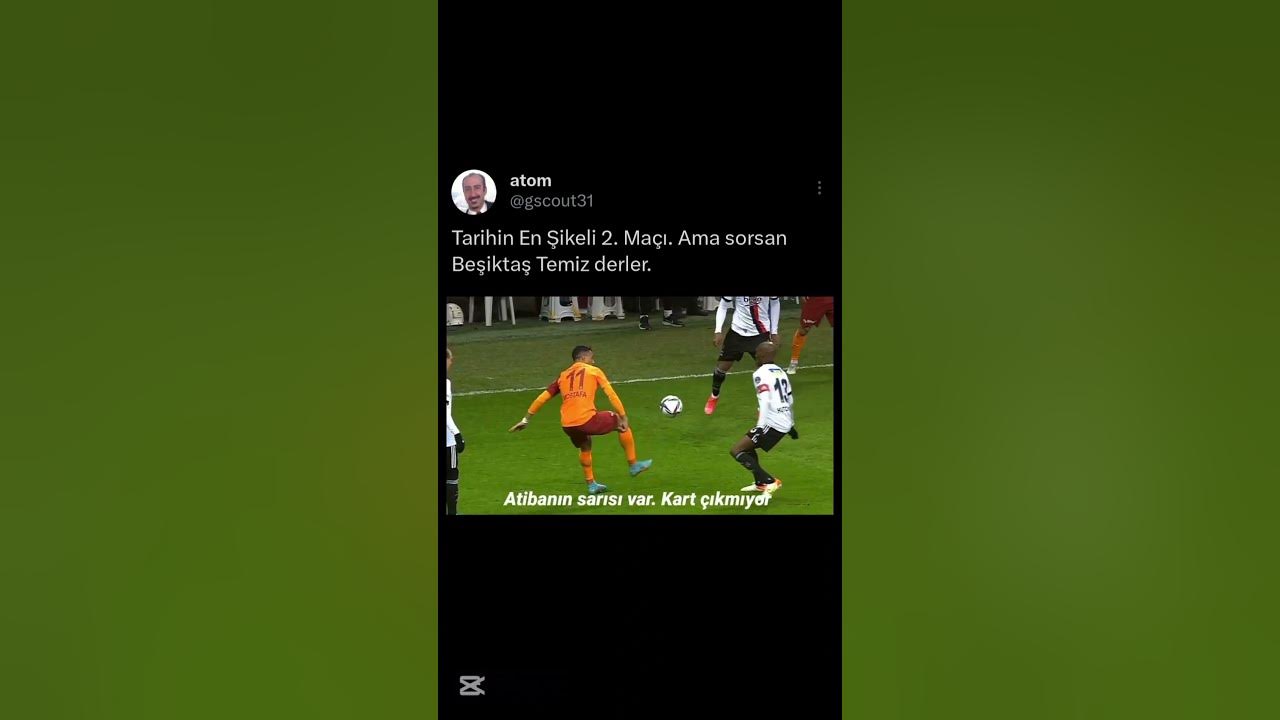
The 'Efendi' Debate: Beşiktaş's Contradictions and Fan Banners
In the passionate world of Turkish football, club identities are fiercely defended, and rivalries run deep. Few aspects of these identities are as contested as Beşiktaş JK's long-standing claim to being "Efendi Beşiktaş" – the gentlemanly club. This self-proclaimed moniker, symbolizing honor, fair play, and dignity, has become a double-edged sword, especially in the eyes of their fierce rivals. At the heart of this intense debate lies an iconic fan banner, now deeply embedded in the folklore of Turkish derbies: "Kendine Efendi Dedirten Bir Yavşak Var." This phrase, roughly translating to "There's a scoundrel making people call him 'Efendi'," encapsulates a deep-seated critique of Beşiktaş's image and has sparked endless discussions among fans and pundits alike.
The banner, first unfurled by Galatasaray supporters several years ago, didn't just target a rival; it targeted the very foundation of their perceived identity. It ignited a firestorm, transforming a simple slogan into a potent symbol of perceived hypocrisy and the enduring contradictions within Beşiktaş's own narrative. This article delves into the origins and impact of this provocative statement, exploring the historical context of Beşiktaş's 'Efendi' image, the fan discourse surrounding the banner, and what it reveals about the complex interplay of identity, honor, and rivalry in Turkish football.
The 'Efendi' Ethos: Beşiktaş's Self-Perception and Its Roots
For decades, Beşiktaş Jimnastik Kulübü has cultivated an image of being the "Efendi" club of Turkish football. This designation implies a commitment to fair play, an honorable conduct both on and off the pitch, and a certain dignified approach to the beautiful game. The term "Efendi" itself carries significant cultural weight in Turkey, denoting a master, a gentleman, or someone respected for their moral character. For Beşiktaş supporters, this identity is a source of immense pride, distinguishing them from their Istanbul rivals, Galatasaray and Fenerbahçe.
The roots of this ethos are often traced back to the club's founding principles and its historical stance on various issues, sometimes portraying themselves as victims of injustice, yet always striving to maintain a moral high ground. They frequently invoke concepts like "Şeref" (honor) and "Hak" (justice or rights) as core tenets of their philosophy. This self-perception, however, is not universally accepted. Rival fans often view it as a selective narrative, used strategically while their actions sometimes contradict these lofty ideals. It is this perceived gap between rhetoric and reality that fuels much of the contention, ultimately culminating in banners designed to puncture the veneer of this self-proclaimed gentility.
The Banner That Ignited a Debate: "Kendine Efendi Dedirten Bir..."
The iconic banner, "Kendine Efendi Dedirten Bir Yavşak Var," first appeared approximately three years ago, courtesy of Galatasaray fans, and has since become a legendary piece of fan iconography. Its power lies not just in its direct insult but in its intricate linguistic and psychological attack on Beşiktaş's carefully constructed image. The phrase itself is a masterstroke of subtle aggression.
Let's break down the key element: "Kendine Efendi Dedirten Bir." This translates to "one who makes himself called 'Efendi'" or "one who has himself called 'Efendi'." The critical word here is "dedirten" (the causative form of "demek" – to say), implying that Beşiktaş actively *forces* or *induces* others to label them 'Efendi'. It suggests a contrived image, not one earned organically or recognized universally. This is distinctly different from "Kendine Efendi Diyen Bir" ("one who calls himself 'Efendi'"), which merely implies self-proclamation. The "dedirten" version suggests coercion or an undue influence on public perception, thereby directly challenging the authenticity of the 'Efendi' title.
This grammatical nuance sparked considerable debate among fans, with some arguing for the "diyen" version as more accurate. However, the chosen "dedirten" powerfully conveys the rival fans' sentiment: that Beşiktaş demands respect it hasn't earned, or that their 'gentlemanly' image is a performance rather than an inherent quality. The inclusion of "yavşak" (a crude term for a scoundrel or an annoying person) further amplifies the insult, stripping away any pretense of dignity from the perceived 'Efendi'.
The banner's re-emergence in specific contexts, such as the Galatasaray vs. Beşiktaş match on May 8, 2021, and again during the August 3, 2024 encounter, demonstrates its lasting impact and relevance. Each time it appears, it serves as a potent reminder and a challenge to Beşiktaş's narrative, especially after match results that might have bruised their rivals' egos. It's a message designed to get under the skin, aiming to reveal what rivals perceive as the true, less 'gentlemanly' nature beneath the surface.
For more insights into the enduring legacy of this chant and its broader implications for Galatasaray's fan culture, you can read about Galatasaray's Iconic 'Efendi' Slogan: Origins and Impact.
Contradictions and Controversy: When the 'Efendi' Image Cracks
The "Kendine Efendi Dedirten Bir" banner isn't just about a single moment; it's a culmination of various perceived contradictions within Beşiktaş's 'Efendi' identity. The constant invocation of "Şeref" and "Hak" by the club often clashes with specific incidents and internal struggles that rival fans are quick to highlight. These instances, whether real or perceived, serve to fuel the narrative that Beşiktaş's 'gentlemanly' facade is easily shattered.
One striking example often cited by critics, and mentioned in the context, is the public spat where a Beşiktaş Divan Chairman reportedly referred to a former club president using highly derogatory terms. Such an internal clash, involving prominent figures within the club, directly undermines the image of a unified, honorable, and dignified institution. For rival fans, this kind of public discord is undeniable proof that the 'Efendi' label is superficial, if not entirely false. It provides ample ammunition for the argument that the club's actions, both internally and externally, often fall short of the high standards they claim to uphold.
Furthermore, issues like the "Mehmet Baykan" incident (a specific controversy that resonated within Turkish football circles, though details aren't explicitly provided in the core reference) are recalled as moments where Beşiktaş's conduct, or their response to events, was seen as anything but 'Efendi'. These instances become touchstones in the ongoing debate, allowing rivals to continually challenge the club's narrative with concrete examples. The banner, therefore, becomes a symbol of this accumulated disillusionment and a weapon in the psychological warfare that defines Turkish football rivalries.
To understand how this 'Efendi' image has been continuously challenged and unpackaged within the context of rivalry, explore Beşiktaş's 'Efendi' Image Challenged: A Rivalry Unpacked.
The Enduring Power of Fan Discourse and Identity
The saga of the "Kendine Efendi Dedirten Bir" banner is a powerful illustration of how fan discourse shapes and redefines club identities. In Turkish football, fan banners are more than just displays of support; they are historical records, political statements, and acts of psychological warfare. This particular banner has evolved into a legend, a 'destan' (epic) as some observers have noted, continually re-emerging to challenge Beşiktaş's self-narrative. It highlights the collective memory of fan bases, where past grievances and perceived hypocrisies are never forgotten, but rather amplified and recycled through creative, often biting, expressions.
For clubs, maintaining a consistent and authentic image is crucial, especially when that image is tied to values like 'honor' and 'gentlemanly conduct'. When internal conflicts or external actions contradict this image, rivals are quick to pounce. The 'Efendi' debate serves as a valuable lesson:
- Authenticity Matters: A self-proclaimed identity must be consistently reflected in actions. Inconsistencies will be exploited by rivals.
- The Power of the Narrative: Fan banners and chants are potent tools in shaping and challenging public perception. They can distill complex issues into memorable, impactful messages.
- Rivalry as a Mirror: Rivals often hold a club accountable in ways that internal stakeholders might not. Their critiques, however harsh, can reveal uncomfortable truths.
This ongoing debate ensures that Beşiktaş's 'Efendi' status remains perpetually under scrutiny, forcing the club and its fans to continually defend and justify this cherished aspect of their identity against a backdrop of fierce and unyielding rivalry.
Conclusion
The "Kendine Efendi Dedirten Bir Yavşak Var" banner is far more than a simple insult; it is a meticulously crafted critique that cuts to the core of Beşiktaş's identity in Turkish football. It challenges the very notion of a self-proclaimed 'Efendi' club, highlighting perceived contradictions between rhetoric and reality. This legendary piece of fan art, continuously revisited in derbies, serves as a potent reminder of the complex interplay of honor, hypocrisy, and enduring rivalry. It underscores the power of fan discourse to shape narratives, provoke introspection, and keep the fiery spirit of competition alive, ensuring that the debate over who truly embodies the 'Efendi' spirit will continue to echo through the stands for years to come.